
Release an Application Version
Release an Application Version in JFrog AppTrust.
Releasing an application version means to promote it to the release stage, which in AppTrust is called PROD by default.
When your lifecycle includes governance, you can create one or more lifecycle policies on the Release gate. This is a final opportunity to evaluate the application version pre-release to ensure that it meets all of your organization's criteria and is free from critical vulnerabilities.
Only those application versions that pass the release gate successfully are marked as "trusted releases". If the Release gate has not been configured, the application version is considered released as soon as the release operation is complete.
The procedure to release an application version is very similar to the procedure for promotion. You can use the drag-and-drop method or the Actions menu, as described below.
Drag-and-drop on the Stages Board
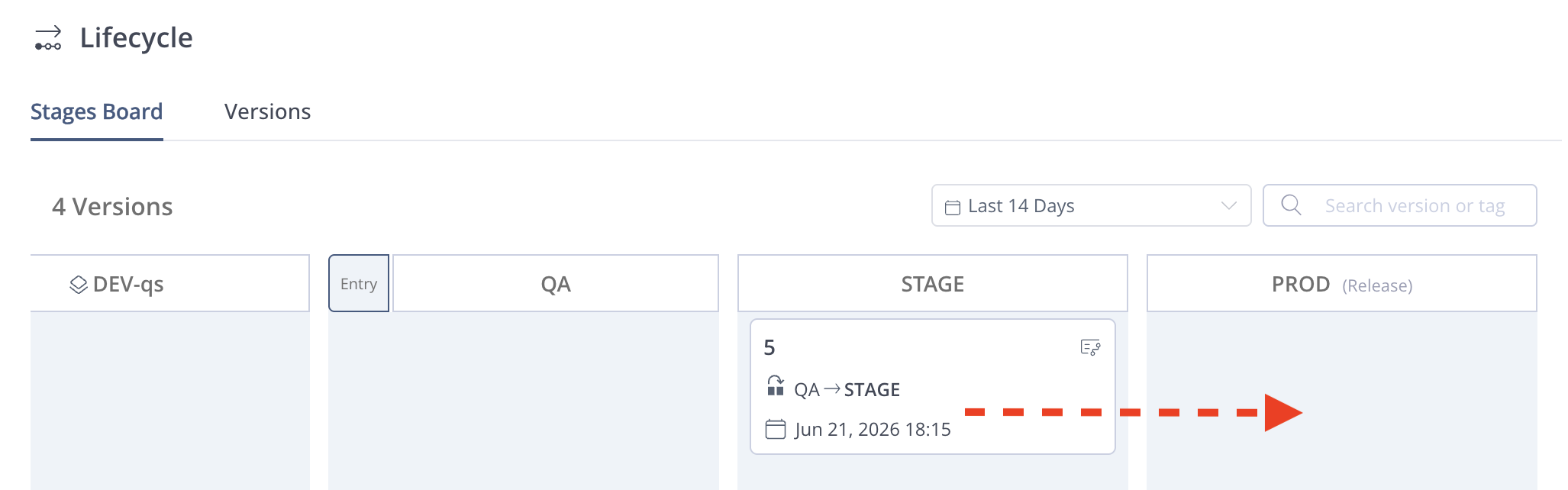
The easiest way to release an application version manually in the platform UI is to simply drag it from its current stage and drop it in the PROD stage, as described below.
Prerequisite:
To release an application version, you must have a Role that includes the Release permission. For more information, see Set Promote and Release Permissions.
To release using drag-and-drop:
- In the JFrog Platform, go to AppTrust > Applications.
- In the Applications table, click the name of the relevant application.
- In the sidebar, click Lifecycle. The Stages Board tab is displayed by default.
- Locate the card for the relevant application version, then drag-and-drop it in the release stage (PROD). When you release the card, the New Promotion dialog wizard appears.
- In the Promotion Stage tab, do the following:
- (optional) Change the signing key, if desired.
Note:
Ensure the signing key is valid. The operation will fail if the key has expired.
- Choose the promotion type: Copy Artifacts or Move Artifacts.
If you choose Move Artifacts, the artifacts contained in the application version are deleted from the repositories in the source stage during release.
- Verify the selected target stage is PROD.
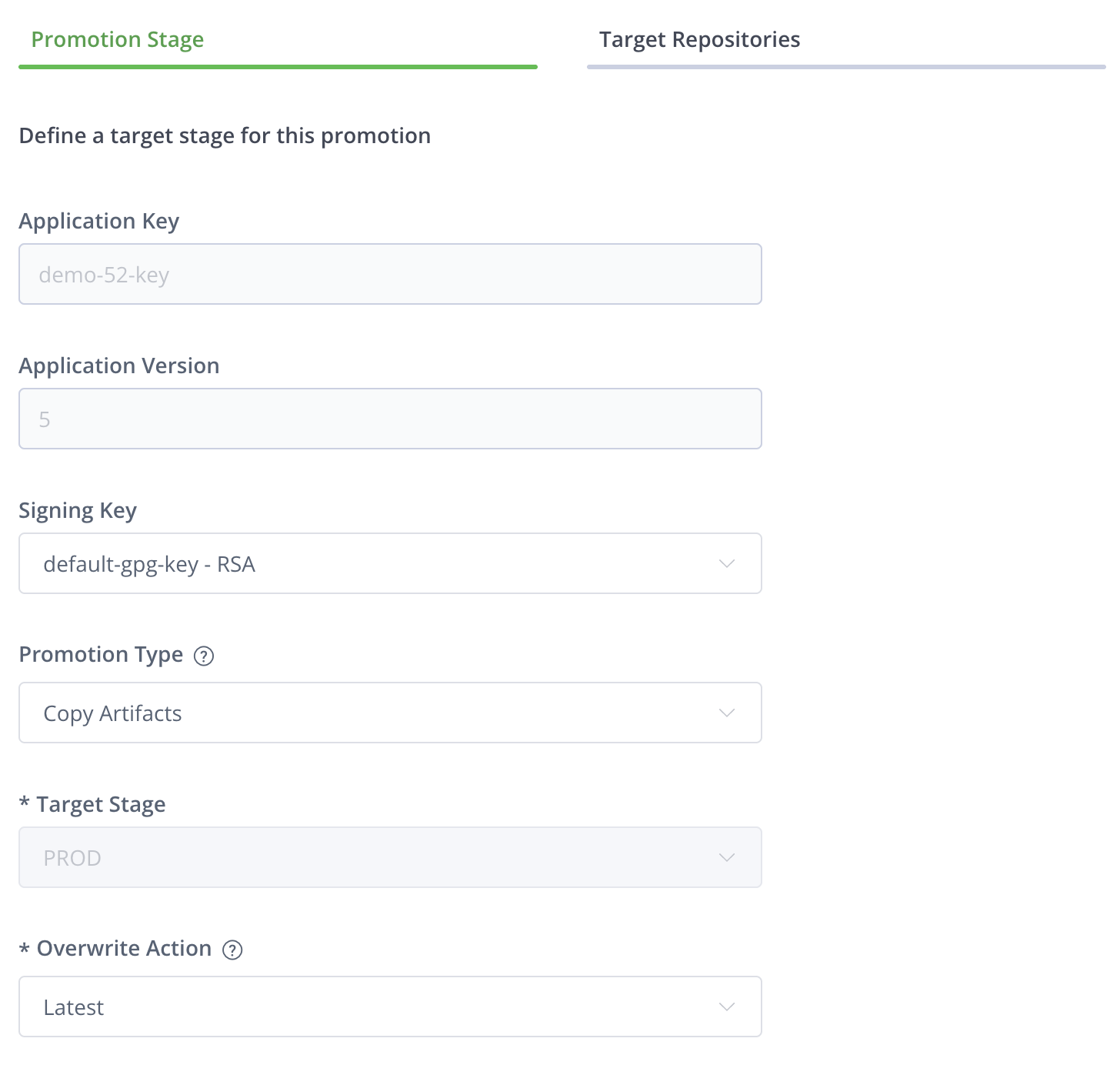
- Click Next.
- In the Target Repositories tab, review the list of target repositories for each package type. To modify the list, open the relevant dropdown list and clear the checkmark next to each repository to exclude it from the release.
Note:
There must be at least one repository defined for each package type.
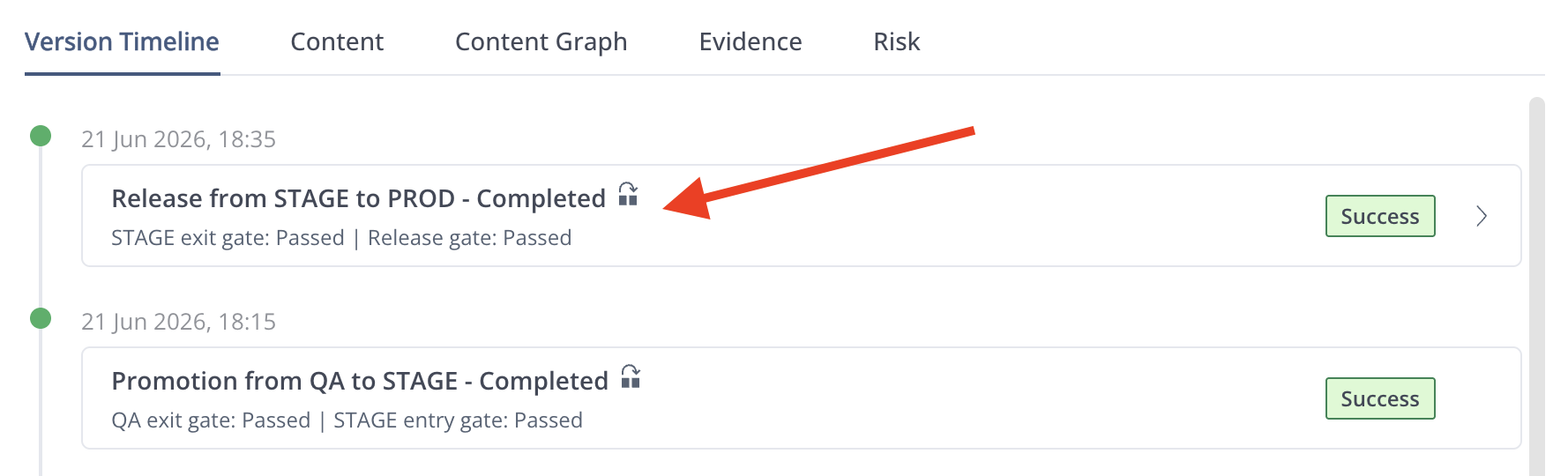
- Click Promote. The relevant card moves to the PROD stage. The icon on the card indicates which type of release was performed. In addition, the release is added as an event on the timeline.
Release from the Actions Menu
Another way to release an application version manually is to select the option from the Actions menu.
To release an application version from the Actions menu:
- For the version you want to release, go to the Version Timeline.
- Click Actions > Release Version.
- Continue the release process, as described above.
Release with Governance
If your lifecycle includes governance, the application version is released to the PROD stage only if it passes the evaluations defined by the lifecycle policies configured on Release gate. The results of each evaluation can be viewed on the application Evaluation tab.
Version release will fail if the application version violates a policy containing a rule configured to fail upon violation. In such cases, an error message is displayed on the card and in the version timeline.
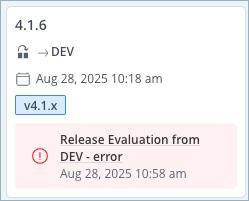
Click the error message to see details about why the release failed, including the name of the policy which failed. Click Full Evaluation to see complete details.
Updated 3 months ago